
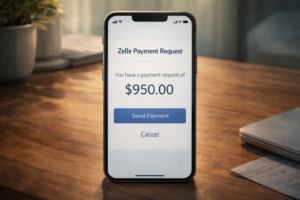
What are Zelle scams?
Zelle is a fast, convenient way to send money directly between bank accounts. But its speed and simplicity make it attractive to scammers too. Zelle scams happen when scammers trick you into sending them money through the Zelle payment app, often by pretending to be someone trustworthy or creating a fake emergency.
The scale of these scams is substantial. In the first nine months of 2025, Americans lost $373.6 million to peer-to-peer payment scams like Zelle — a 35% increase over the same period the year before. Zelle processed over $1 trillion in payments during 2024, making it one of the most popular payment methods in the country. While the service is legitimate and backed by major banks, its irreversible transfers create a perfect opportunity for scammers. Once you send money via Zelle, it’s nearly impossible to get it back.
The problem has grown so significant that in August 2025, the New York Attorney General sued Zelle’s parent company, Early Warning Services, alleging the company enabled widespread scam activity by failing to implement adequate protections. A similar federal lawsuit from the CFPB was dropped in March 2025. These legal actions highlight how vulnerable Zelle users remain despite the platform’s massive adoption.
How Zelle scams usually work
Zelle scams follow a simple formula: scammers create a reason for you to send money, then vanish once the transfer completes. The specific reason changes based on the scam type. Here are the six most common variants.
Bank and financial institution impersonation scams
In these scams, someone contacts you pretending to work for your bank. They claim suspicious activity has occurred on your account and that you need to move money immediately to protect it. For a detailed breakdown of how these calls work, see our full guide on Zelle impersonation scams and fake bank fraud calls.
Eileen from San Francisco received a text that appeared to be from Wells Fargo about a $957 Zelle transfer she didn’t make. She called what she believed was the bank’s fraud department. The scammers were on the other end. They convinced her that her account was compromised and guided her through transferring money via Zelle to “secure” it. By the time she contacted the real Wells Fargo, the transfer was complete and irreversible.
These scams work because scammers often already have some of your real account information — obtained from data breaches, public records, or previous scams. They create urgency by claiming your account will be locked unless you act immediately. The scammer then walks you through the Zelle transfer process step by step.
“Pay yourself” and account verification scams
Some scammers use a particularly deceptive tactic: they ask you to send money to yourself via Zelle. This sounds harmless, but it’s actually a setup. We cover this tactic in detail in our article on the Zelle “Send Money to Yourself” scam.
The scammer claims they’re verifying your identity or checking your account’s eligibility for a loan, refund, or job. They tell you to use Zelle to send a specific amount to your own account as “proof” that it’s active. Once you do this, they ask you to send the same amount to them, claiming it’s a “verification fee” or “escrow charge.” You’ve now sent money directly to a scammer.
Michael received a call appearing to be from his Chase branch. The caller had him Google the branch number to “verify” it — a common trick where scammers ensure you reach someone on their team no matter what. The scammer claimed fraudulent transfers had been made and instructed Michael to send $2,100 via Zelle to “reverse” the charges. He complied, only realizing too late that he’d sent money to criminals, not his bank.
Payment reversal and overpayment scams
In these scams, someone tells you a payment was “reversed” or “failed” and you need to resend it. Alternatively, a buyer claims they accidentally sent you too much money and asks you to refund the difference via Zelle. For more on this tactic, see our article on the Zelle payment reversal scam.
The overpayment version is common. A buyer sends you $1,200 instead of $800 for something you’re selling and asks you to return the $400 difference. You refund it, but the buyer’s initial transfer was fraudulent. That overpayment disappears from your account, and the $400 you already sent is gone for good.
Facebook Marketplace and online selling scams
Marketplace scams target people selling items online. A buyer offers to purchase your item and suggests Zelle as the payment method. They may send you a fake screenshot showing the money was transferred. You ship the item thinking you’ve been paid — but the transfer was never real. We cover this in detail in our guide to the Facebook Marketplace Zelle scam.
Anthony sent $549 via Zelle for an Xbox he found on a marketplace. After the transfer completed, the seller sent him a GIF of the Grinch and blocked him. The console never arrived. Anthony contacted his bank, but they refused to help because he had authorized the Zelle transfer himself.
Kai noticed an Instagram post from what appeared to be a friend’s account about an easy way to make money. Kai sent $500 via Zelle to participate. The account then asked for additional “release fees.” Kai ended up losing over $1,100 total. The friend’s account had been compromised, and the scammer was using it to target people who trusted the account.
Romance and social media scams
Scammers create fake profiles on dating apps and social media, building relationships over weeks or months. Once trust is established, they ask you to send money via Zelle for travel, medical emergencies, or investments. These scams are covered in depth in our online romance scam guide.
Romance scams are especially effective because the emotional connection makes you more willing to overlook warning signs. The scammer may ask you to open a separate bank account or create a fake investment website. In all cases, Zelle is the preferred payment method because it’s fast and irreversible.
Fake rental, job, and utility scams
Scammers impersonate landlords, employers, or utility companies. A job offer scam involves receiving a position with a recognizable company. The “employer” asks you to pay for background checks, equipment, or onboarding via Zelle. You never receive the job, and your money is gone.
Rental scams work similarly. Someone shows you a listing with an attractive price and asks for a deposit via Zelle to “secure” the unit. Once you send the money, the property isn’t actually available and the scammer disappears. Utility scams involve calls claiming your electricity, water, or internet will be shut off unless you pay an overdue balance immediately through Zelle.
Real-world examples
The victim stories throughout this article share common patterns worth highlighting.
Eileen’s case is typical of bank impersonation scams. The scammer had enough real information about her account to sound credible. They created panic by claiming her account was compromised, then guided her through a process that felt like security verification but was actually theft. She never questioned the phone number because the scammer answered on the other end.
Michael’s mistake was trusting the caller’s request to Google the Chase number. Scammers know this trick — they ask you to “verify” a number, but they stay on the line or have an accomplice ready to answer. The instruction to send money via Zelle was presented as a security measure, not a theft.
Kai’s situation shows how compromised social media accounts become weapons. The attacker wasn’t a stranger — Kai was seeing a familiar account. The request for additional “release fees” is a classic advance-fee tactic. Victims have already sent money once, so asking for more feels like they’re close to getting their reward.
Anthony’s case represents the harsh reality of marketplace scams. His bank took the position that Anthony voluntarily authorized the transfer, which is technically true but offers no comfort when the Xbox never arrives and the scammer has vanished.
Red flags: Legitimate Zelle use vs. scams
The key to avoiding Zelle scams is recognizing when something doesn’t match how legitimate payments work:
| Legitimate Zelle Use | Zelle Scam Warning Signs |
|---|---|
| Sending money to someone you know personally | Sending money to someone you’ve never met in person |
| You initiate the payment yourself | Someone asks you to send money or “verify” a transfer |
| No urgency or pressure | Urgency: “Act now or your account will be locked” |
| Your bank contacts you through the app or official number | Contact comes via text, email, or unexpected call |
| Payment is for something you agreed to in advance | Payment is to “fix” a problem you didn’t know existed |
| Small amounts between friends and family | Large amounts for purchases, deposits, or “fees” |
Pay special attention to the communication method. Real banks don’t initiate fraud claims via text message or ask you to call a number provided in an unsolicited message. If you receive a suspicious alert, contact your bank using the number on your statement or the back of your debit card.
How to protect yourself
The best protection against Zelle scams is recognizing their common tactics. Here’s what works:
Verify before sending. If someone claiming to be from your bank contacts you about fraud, don’t call the number they provide. Hang up and call your bank directly using a number you find yourself — on your statement, on the back of your card, or on the bank’s official website. Real banks expect this. Our guide on What Real Companies Will Never Ask You To Do covers this in more detail.
Never send money to someone you haven’t met. This applies to online dating, job opportunities, marketplace purchases, and any other context. If someone you haven’t met in person is asking for money via Zelle, treat it as a scam until proven otherwise.
Be suspicious of urgency. Legitimate financial institutions don’t create artificial deadlines for account security actions. If someone pressures you to send money immediately or your account will be locked, that pressure itself is the scam.
Watch for the “verify yourself” request. No legitimate company asks you to send money to yourself or to make a payment to verify your account. This is purely a scam tactic.
Check links carefully. If you receive a text or email asking you to click a link and verify account information, don’t click it. Go directly to the company’s website by typing the URL yourself.
Use Zelle only for people you know and trust. Zelle is safe when you’re sending money to friends and family. The risk comes from sending money to strangers or people you haven’t verified in person.
What to do if you’ve been scammed through Zelle
If you realize you’ve been scammed, act quickly. Here are the steps to take:
- Contact your bank immediately. Call the fraud department using the number on your bank statement. Tell them you sent money via Zelle to a scammer. Ask them to contact Zelle’s fraud team. The window for reversing transfers is small — sometimes just hours.
- File a formal report with your bank. Document exactly how much money was sent, when it was sent, and any details about the recipient. Keep copies of all communication.
- Report to the FTC. File a complaint at reportfraud.ftc.gov. The FTC uses these reports to track scam trends and take action against scammers.
- Report to the FBI’s IC3. Visit ic3.gov and file a complaint. This creates an official record for law enforcement.
- Check your credit and monitor accounts. If the scammer has any of your personal information, they may attempt identity theft. Check your credit report at annualcreditreport.com and set up fraud alerts with the major credit bureaus (Equifax, Experian, TransUnion).
- Save all evidence. Keep screenshots of messages, transaction confirmations, bank statements, and any other documentation of the scam.
Why getting money back from Zelle is difficult
Despite the harm these scams cause, getting reimbursed is extremely challenging.
Zelle is designed for speed and finality. Once a transfer completes, it goes directly to the recipient’s bank account with no “undo” button. This design is intentional — it makes Zelle reliable for legitimate payments, but it also protects scammers.
Banks have reduced their willingness to reimburse Zelle disputes over time. A U.S. Senate investigation found that banks reimbursed victims in 62% of Zelle dispute cases in 2019, but that percentage dropped to just 38% by 2023. Most victims don’t get their money back, even when they report promptly.
The core challenge is that Zelle transfers involve the victim’s willing authorization. You initiated the payment yourself through your banking app. From a technical standpoint, there was no unauthorized access. The deception was social, not technical, and banks often argue they aren’t responsible for reimbursing victims who were socially engineered into sending money.
Point Predictive, a fraud prevention firm, estimates that Zelle faces approximately $725 million in annual scam exposure. The New York Attorney General’s 2025 lawsuit alleges that Zelle failed to implement basic prevention measures — transaction monitoring, customer authentication, and victim assistance programs — that could have reduced losses significantly.
To understand why scammers prefer payment methods like Zelle, see our article on Why Scammers Ask For Gift Cards, Crypto, and Zelle.