
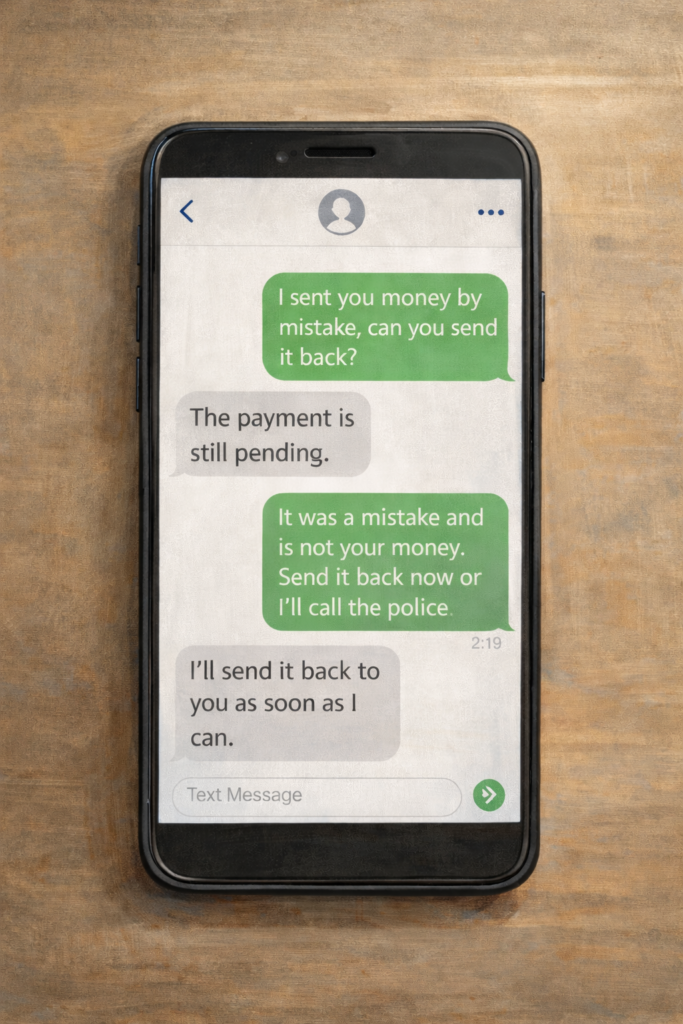
What is the Zelle refund scam?
The Zelle refund scam is a common tactic where a scammer uses the idea of a “refund” to trick you into sending real money. It usually starts with a message claiming they accidentally paid you, overpaid you, or need you to “send it back” for some urgent reason, often paired with a convincing-looking screenshot or fake notification. The key detail is that you are being pushed to make an intentional transfer out of your own account, and once you do, it can be extremely difficult to get back. If you want the bigger picture on the most common Zelle fraud patterns (and why they’re so hard to unwind), read Zelle Scams: How They Work and How to Avoid Them.
How this scam usually works
The scam often begins with an unexpected text, email, social media message, or phone call claiming you were sent money by mistake and need to refund it immediately, sometimes with pressure like “my rent is due” or “my account will be locked.” In many cases, the scammer shows a screenshot that appears to confirm a payment, or they rely on the fact that people confuse a payment request, notification, or pending activity with money that actually settled. Once they have your attention, they steer you toward sending funds back through Zelle, sometimes insisting you must send the refund to a different number or email than the one that “paid” you. The play is simple: the scammer’s message is designed to create urgency and guilt while moving you past the step that matters most—verifying inside your bank app whether money truly posted and cleared. If your “refund” is sent, it becomes your authorized transfer, even though it was triggered by deception.
How to protect yourself
Don’t refund anything based on a screenshot, a text notification, or a story—verify the transaction inside your bank’s official app or website and look for a posted, settled payment (not a request, not a pending item, and not something you only see in a message thread). If someone claims they paid you by mistake, the safest move is to stop communicating and contact your bank directly using the official number, because legitimate errors are handled through the bank’s dispute and fraud processes, not by you manually sending money back under pressure. Also remember that Zelle is meant for sending money to people you know and trust, and scammers often exploit confusion about “reversals” and “refunds” to get you to move fast—if you want a deeper explanation of that confusion tactic across apps, see Zelle Payment Reversal Scam: How It Works and How to Avoid It. A practical rule that prevents most losses is simple: if the situation requires you to send money to “fix” money, treat it as a red flag and slow down.
What to do if you’ve been affected
If you sent money, contact your bank or credit union immediately and report the transfer as fraud, because early reporting is your best shot at any recovery options (even if the odds are limited). Save screenshots of the conversation, the phone number or account details used, and the exact amount/date/time of the transfer, since that documentation helps your bank investigate and can be useful if you file reports with the FTC and local authorities. If the scam began with a fake bank message or “refund confirmation,” review your account activity for other signs of compromise and tighten security (password changes, device/account checks, and alerts) so the scam doesn’t expand into additional losses. Many people freeze in the moment because the scam feels like a simple mistake to correct, but the most effective next step is to stop sending anything else and move the situation into official channels immediately.
Related articles
Zelle Scams: How They Work and How to Avoid Them
Zelle Payment Reversal Scam: How It Works and How to Avoid It
Why Scammers Ask For Gift Cards, Crypto, and Zelle