
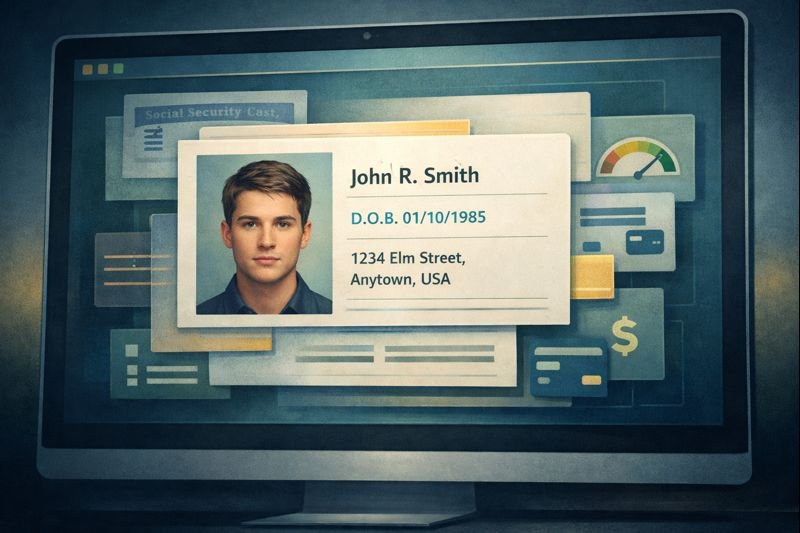
What is the synthetic identity scam?
A synthetic identity scam is a type of fraud where criminals create a fake but realistic identity using a combination of real and fabricated information. This often includes a legitimate Social Security number paired with a false name, date of birth, address, and online presence. Unlike traditional identity theft, the goal is not to take over an existing person’s accounts, but to create an entirely new “person” that can pass basic identity checks.
How this scam usually works
Scammers start by assembling pieces of personal data, often using Social Security numbers that are less likely to be actively monitored, such as those belonging to children, seniors, or people with limited credit history. They then create accounts using a made-up name and supporting details, gradually building credibility over time. This fake identity may open small credit lines, maintain on-time payments, and slowly establish a credit profile. Once the identity is trusted, scammers use it to take out larger loans, open new accounts, or commit financial fraud before disappearing.
Why this scam is considered emerging and on the rise
Synthetic identity scams are growing because digital systems increasingly rely on automated identity checks rather than in-person verification. Online account creation, instant credit decisions, and AI-generated photos and profiles make it easier for fake identities to appear legitimate. At the same time, these scams are harder to detect because there is often no obvious victim monitoring the identity in real time, allowing the fraud to continue unnoticed for months or even years.
How to protect yourself
Protecting yourself starts with monitoring your credit and financial records regularly, even if you do not actively use credit. Parents and guardians may want to check whether a child’s Social Security number has a credit file attached to it. Being cautious about sharing personal information, freezing credit when appropriate, and reviewing unexpected mail or account notices can also help reduce the risk of synthetic identity fraud going undetected.
What to do if you’ve been affected
If you believe a synthetic identity has been created using your information, act quickly to limit further damage. This may include placing a fraud alert or credit freeze with the credit bureaus, reviewing your credit reports for unfamiliar accounts, and documenting everything you find. Reporting the issue early can help prevent the fake identity from being used for additional fraud and reduce long-term financial impact.