
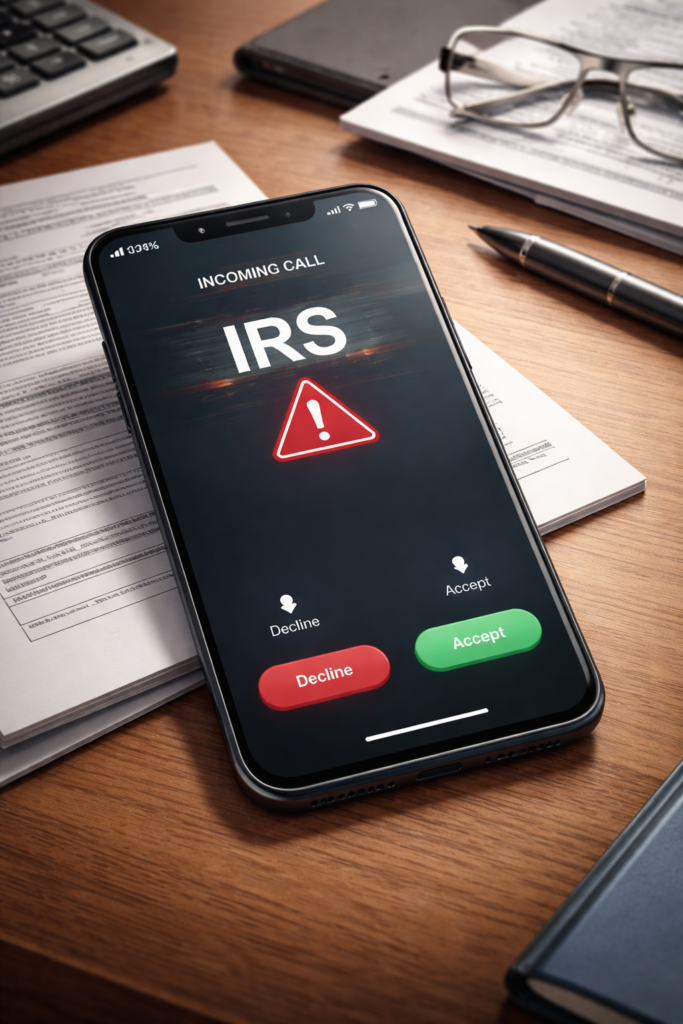
Government impersonation scams are a common type of fraud where scammers pretend to be from agencies like the IRS, Social Security Administration, immigration services, the courts, or law enforcement. These scams rely on fear and urgency, often warning that you owe money, missed an important notice, or are facing legal consequences, all in an effort to pressure you into acting before you have time to verify what’s actually happening.
How this scam usually appears
This scam often begins with a phone call, voicemail, text message, or email that appears official at first glance. Scammers may spoof caller ID, use government logos, or reference fake case numbers to sound legitimate, similar to tactics used in bank impersonation scams. The message typically claims there is an urgent issue with your taxes, benefits, or legal status and insists that immediate action is required.
How the scam unfolds
Once contact is made, the scammer escalates quickly by introducing threats such as arrest, fines, deportation, or loss of benefits. To maintain control, they may pressure you to stay on the phone, discourage you from contacting anyone else, or warn that verifying the claim will make the situation worse. Eventually, they demand payment through gift cards, cryptocurrency, wire transfers, or peer-to-peer payment apps, or attempt to collect sensitive information like your Social Security number, bank details, or one-time login codes, a tactic commonly seen in payment-based scams.
ScamProtector Pattern – Fear of consequences
These scams succeed by amplifying the fear of serious consequences—arrest, legal trouble, deportation, or benefit loss. Even people who normally verify information may panic when faced with official-sounding threats. Scammers know that fear narrows decision-making, making it harder to slow down, ask questions, or seek help. The moment fear replaces verification, the scam has done its job.
What real government agencies do not do
Legitimate government agencies do not threaten immediate arrest or deportation over the phone, demand payment using gift cards or cryptocurrency, or pressure you to resolve issues the same day. In most cases, official government communication starts with written notice sent through mail or secure online portals, giving you time to respond, verify details, and seek help if needed.
If you receive a message claiming to be from the government
If you receive a call, text, or email claiming to be from a government agency, pause before taking action. Do not provide personal information, send payments, click links, or download attachments. The safest step is to end the contact and independently verify the claim by looking up the agency’s official contact information yourself, similar to the process outlined in how to spot fake login pages and phishing websites.
If you already responded or sent money
If you already shared information or made a payment, act quickly by stopping all contact with the scammer and contacting your bank or payment provider to ask about fraud protections or possible recovery. You should also secure your accounts by changing passwords, enabling two-factor authentication, and monitoring for unusual activity, following the steps outlined in how to secure your online accounts.
Why this scam continues to work
Government impersonation scams remain effective because they exploit fear, authority, and urgency. Many people instinctively trust government institutions and want to avoid serious consequences, making them more likely to comply under pressure. Taking a moment to pause and verify through official channels is often enough to stop the scam before real harm occurs.