
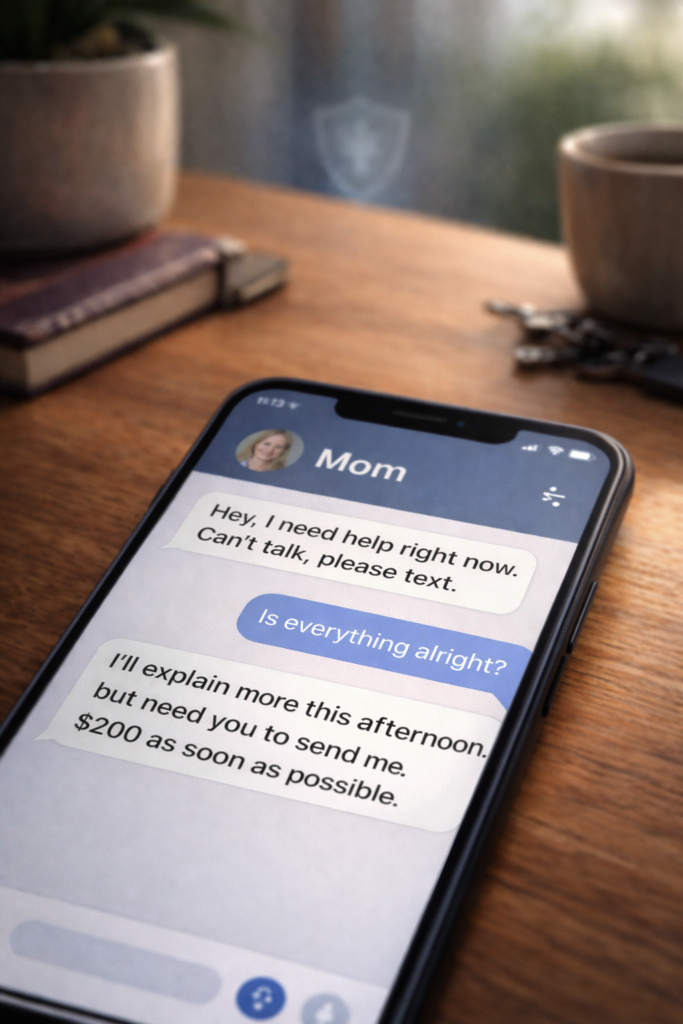
What is the friend or family impersonation scam?
A friend or family impersonation scam happens when a scammer pretends to be someone you know — such as a relative, close friend, or trusted contact — and sends an urgent message asking for help. The message may claim they are in trouble, locked out of an account, traveling, or dealing with an emergency that requires quick payment. Because the request appears to come from someone familiar, many people respond before stopping to verify whether the message is real.
How this scam usually works
The scam typically begins with a text message, social media direct message, or messaging app notification that says something vague but alarming, like “Hey, I need your help right now” or “I’m in trouble and can’t talk.” The scammer may use information pulled from social media profiles to sound convincing and will often ask to move the conversation to another platform. Once trust is established, they request money through gift cards, wire transfers, cryptocurrency, or peer-to-peer payment apps, stressing that it must be done immediately and kept private.
How to protect yourself
The most effective protection is to pause and verify before responding. If you receive an unexpected urgent request from someone you know, contact them through a different method — such as calling their phone number or reaching out through another trusted channel. Be cautious of messages that discourage verification, ask for secrecy, or pressure you to act quickly. Limiting the personal information you share publicly on social media can also reduce how believable these messages appear.
What to do if you’ve been affected
If you sent money or shared sensitive information, contact your bank or payment service immediately to see if the transaction can be stopped or flagged. Change passwords on any accounts that may be compromised and alert the real person whose identity was used so they can warn others. You should also report the incident to ReportFraud.ftc.gov to help document the scam and protect others.