
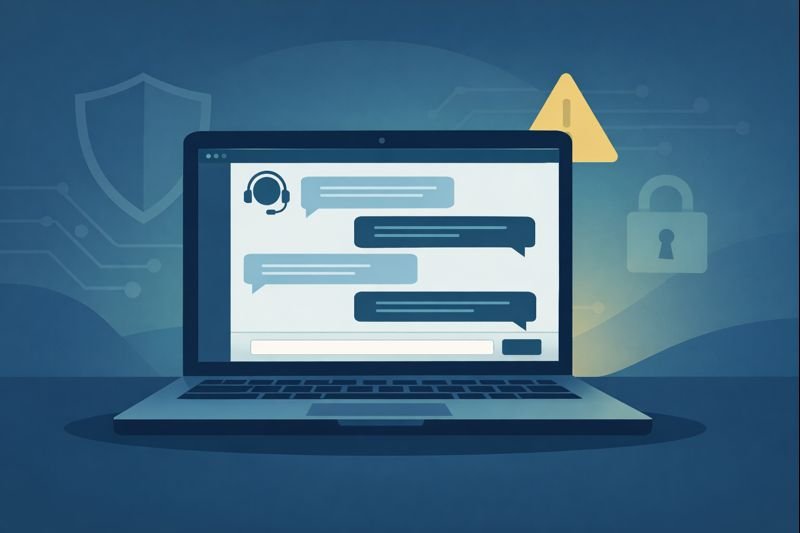
What is the AI-generated customer support chat scam?
The AI-generated customer support chat scam is a newer fraud tactic that targets people who are actively trying to fix a real account, service, or billing issue. Instead of being routed to an official support channel, victims land on realistic-looking support pages with live chat widgets that appear legitimate and responsive. This tactic closely overlaps with other impersonation-based fraud, including fake tech support scams, where scammers rely on familiarity and urgency to gain trust.
How this scam works
The scam typically begins when someone searches online for a customer support phone number or help page for a well-known company such as a bank, email provider, streaming service, or software platform. Scammers use paid ads, manipulated search results, or cloned support pages to place fake sites near the top of listings, encouraging users to start a live chat instead of reaching an official portal. Once the chat begins, responses arrive quickly and use technical language to build trust while steering the conversation toward claims of suspicious activity, billing errors, or security threats that supposedly require immediate action, ultimately prompting victims to share one-time login codes, approve authentication requests, install remote access software, or move money to a so-called secure account.
Scam Pattern – Trusting The Chat Interface
As AI chat becomes common, scammers mimic legitimate support tools to gain trust through the interface itself, using guided conversations to lead victims into unsafe actions.
Why this scam is considered emerging and on the rise
This scam is spreading as legitimate companies increasingly rely on chat-based customer support, making live chat a familiar and trusted experience for users. Scammers take advantage of this shift by using AI-assisted tools that allow them to handle many conversations at once, generate convincing responses, and rapidly clone support pages for multiple brands at low cost. As fake support pages become more polished and automated, it becomes harder for users to distinguish real customer service from fraud, allowing this scam to scale quickly.
Warning signs to watch for
A major warning sign is being asked to take actions that legitimate customer support would not request through chat, such as sharing one-time login codes or approving unexpected authentication prompts, a tactic also seen in fake two-factor authentication approval scams. Messages that stress urgency, reference vague claims like unusual activity or account suspension, or discourage you from leaving the chat to verify information are strong indicators of fraud. Requests to move money, purchase gift cards, or send payments as part of a security or verification process should always be treated as suspicious.
How to protect yourself
To avoid this scam, access customer support only through official channels by typing the company’s website address directly into your browser or using a trusted bookmark rather than clicking ads or search results. Be cautious of chat widgets on unfamiliar pages and pause any interaction that pressures you to act quickly or bypass normal verification steps. Learning how to recognize fake login pages and phishing websites can also help reduce the risk of being redirected to fraudulent support portals.
What to do if you’ve been targeted
Many people fall for this scam because it appears during moments of real stress while they are trying to fix a legitimate problem. If you believe you may have shared sensitive information or followed instructions from a fake support chat, secure your accounts immediately by changing passwords, enabling two-factor authentication, and reviewing recent activity. If money was moved or access was granted, contact your financial institution right away and report the incident to the impersonated company and relevant consumer protection agencies.