
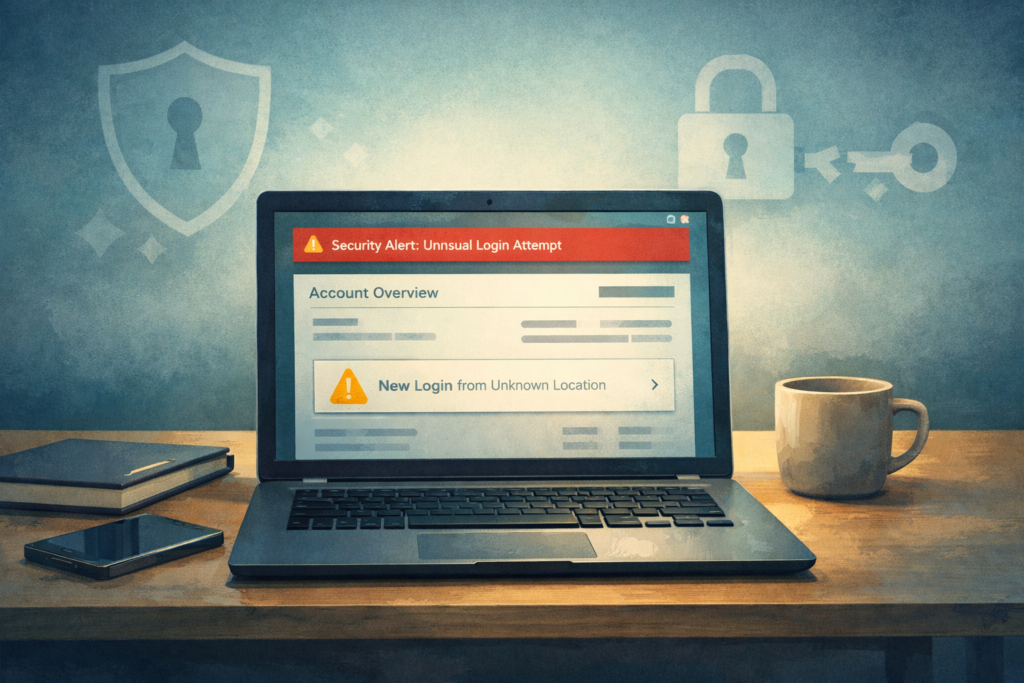
What is the account takeover scam?
Account takeover scams happen when criminals gain unauthorized access to one or more of your online accounts, such as your email, bank, social media, or shopping accounts, by stealing your login credentials. Instead of opening new accounts in your name, scammers take control of existing ones, often without being noticed right away. Once inside, they may lock you out, change security settings, steal money, impersonate you, or use your accounts to target other people.
How this scam usually appears
Most account takeovers begin quietly and look routine at first. You might receive a convincing message that looks like email phishing, asking you to verify your account, reset your password, or review a security alert, which leads to a fake login page designed to capture your credentials. In other cases, scammers use previously leaked passwords from data breaches, relying on the fact that many people reuse the same login across multiple sites. Sometimes the first sign is subtle, like a password reset email you didn’t request or a login alert from a new device or location.
Why this scam continues to work
Account takeover scams work because they exploit everyday habits rather than obvious mistakes. People are used to logging into accounts, responding to security alerts, and clicking links that appear familiar. The sheer number of data breaches has also made stolen passwords widely available, allowing scammers to test known credentials across many platforms automatically. Because takeovers often happen without immediate financial loss, victims may not realize anything is wrong until real damage has already occurred.
Scam pattern – Having multiple accounts breached due to using the same log in credentials.
Stolen usernames and passwords are frequently reused across many platforms, allowing one compromised login to unlock multiple accounts. Once access is gained, scammers typically change security settings quickly to lock the real owner out and extend control.
Warning signs to watch for
Common warning signs include password reset emails you didn’t request, notifications about new logins or devices you don’t recognize, changes to account settings you didn’t make, or being suddenly locked out of an account. You may also notice suspicious messages sent from your email or social media accounts that you didn’t write. In some cases, financial accounts may show small test charges or unfamiliar activity before larger fraud follows.
How to protect yourself
Strong account security habits dramatically reduce the risk of account takeovers. Use unique passwords for important accounts, especially email, banking, and financial services, and avoid reusing the same password across multiple sites. Enable two-factor authentication wherever possible, using an authenticator app rather than text messages when available. Learning how to secure your online accounts and being cautious with links in emails or texts asking you to log in can significantly lower your risk. Review account statements on a regular basis and look for any suspicious charges.
What to do if you’ve been targeted
If you believe an account has been compromised, act quickly by changing the password immediately and securing any connected accounts that use similar credentials. Review recent activity, log out of other sessions, and update security settings such as recovery email addresses and phone numbers. If financial accounts are involved, contact the institution right away to report the issue and prevent further losses. If someone you care about is affected, guidance for helping a loved one who may be getting scammed can also be useful.
Why account takeovers are so common
Account takeover scams are common because they are efficient, scalable, and low risk for criminals. Stolen credentials can be reused repeatedly, sold in bulk, or tested automatically across thousands of sites. As more of daily life moves online, a single compromised login can unlock access to personal information, money, and even other people’s trust, making this one of the most persistent and widespread scams people encounter today.