
What is the scam?
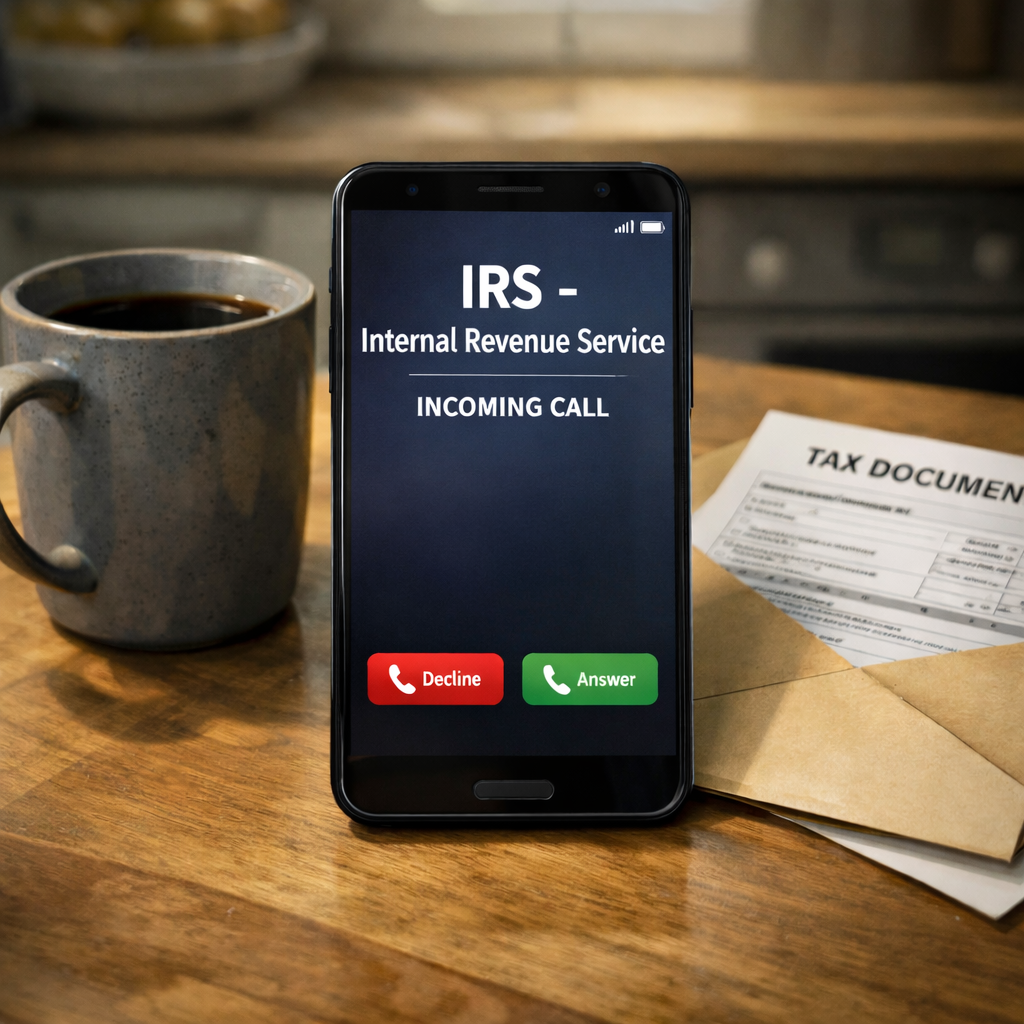
The IRS impersonation scam is a government impersonation scam where scammers contact you by phone, text, or email pretending to be agents from the Internal Revenue Service. They claim you owe back taxes and must pay immediately or face arrest, deportation, license suspension, or other legal consequences. The goal is to pressure you into sending money — usually through gift cards, wire transfers, or cryptocurrency — or handing over personal information like your Social Security number.
This is one of the longest-running and most reported scams in the United States. Between 2013 and March 2025, more than 2.1 million people reported receiving IRS impersonation calls to the Treasury Inspector General for Tax Administration (TIGTA). Of those, 16,281 victims reported collective losses exceeding $114 million. But that figure only captures what’s been reported directly to TIGTA. The FBI recorded $394 million lost to government impersonation scams in 2023 alone — a 63% increase from 2022. Nearly one in four Americans has lost money to a scam claiming to be from the IRS or a state tax agency, according to a 2025 McAfee survey.
The scam intensifies during tax season (January through April) but runs year-round. Scammers target people in every state, though California, New York, Texas, Florida, and New Jersey see the highest numbers of victims. Older adults are disproportionately targeted, but people of all ages fall for these scams — the tactics are designed to bypass rational thinking by creating fear and urgency.
How this scam usually works
IRS impersonation scams share a common structure: establish authority, create fear, demand immediate payment. The specific method varies depending on whether you’re contacted by phone, text, or email.
Phone call scams
The phone version is the most common and most aggressive. You receive a call — sometimes from a number that appears to be a government agency on your caller ID. The caller identifies themselves as an IRS agent, often with a fake badge number and case file number. They tell you that you owe back taxes and that failure to pay immediately will result in arrest, a lawsuit, or suspension of your driver’s license.
The caller is forceful and won’t let you ask questions or verify their identity. If you push back, they may transfer you to a “supervisor” who reinforces the threat. They instruct you to purchase gift cards from stores like Target, Walmart, or Apple, then read the card numbers over the phone. Some scammers request wire transfers or cryptocurrency instead. For a deeper look at why scammers demand these specific payment methods, see Why Scammers Ask For Gift Cards, Crypto, and Zelle.
In 2025, scammers began using AI voice cloning to create more convincing American accents and natural-sounding conversations. Earlier versions of the scam were often identifiable by heavy foreign accents or robotic delivery, but AI tools have made the calls harder to distinguish from legitimate ones.
Text message and email scams
Text and email versions of the IRS scam have been growing. In 2024, SMS-based IRS scams grew from 3% of reports in January to 13% by December.
These messages claim you have an outstanding tax balance, an unclaimed refund, or an issue with your tax return. They include a link to a website that mimics the IRS login page or a tax payment portal. When you enter your information, the scammer captures your Social Security number, bank account details, or other personal data.
Email versions are often more sophisticated, using official-looking IRS letterheads, case numbers, and legal language. Some reference real IRS forms or programs to seem more credible. The phishing pages they link to can be nearly indistinguishable from the real IRS website.
In-person and mail scams
While less common, some scammers show up in person or send physical letters claiming to be from the IRS. In one case in Walton County, Florida, a scammer traveled from Orlando to collect $19,500 in person from an 82-year-old victim, posing as an IRS agent. The victim had been told over the phone that he and his wife had won a prize but needed to prepay taxes to the IRS to receive it.
The IRS largely stopped making unannounced in-person visits in July 2023, specifically to help taxpayers distinguish real IRS activity from scams. If someone shows up at your door claiming to be from the IRS without a prior appointment, it’s almost certainly a scam.
The escalation pattern
Many IRS scams start with a relatively small claim — a few hundred dollars in “back taxes” — and escalate from there. The scammer may say they’re connecting you with another agency, like the FBI or DEA, to investigate identity theft connected to your tax issue. This is a technique similar to what’s used in bank impersonation scams, where the scam grows more complex as the victim becomes more invested.
The escalation serves two purposes. First, it keeps you on the phone longer, which reduces the chance you’ll stop and think critically. Second, each new “agency” reinforces the illusion of a real investigation. By the time you’re talking to the third person, you’ve already accepted the premise that you’re in serious legal trouble.
Judith from the East Coast lost over $500,000 to a government impersonation scam that started as a tax-related call. What made her situation worse: the IRS then sent her a tax bill for nearly $180,000 on the retirement savings the scammer had convinced her to withdraw. Because the withdrawals from her 401(k) counted as taxable income, she owed taxes on money that had been stolen from her. This double loss — the stolen money plus the tax bill — is a reality that few victims anticipate.
Real-world examples
An 82-year-old man in Freeport, Florida was contacted by scammers who told him he and his wife had won a sweepstakes prize worth millions. To claim it, he was told he needed to prepay taxes to the IRS. A man named Dwight Owens drove from Orlando to Freeport and collected $19,500 from the victim in person, posing as an IRS agent. Owens was arrested and charged with grand theft, impersonating a federal agent, exploitation of the elderly, and scheme to defraud.
Yosvany Padilla of Hialeah, Florida led a conspiracy that stole over $10.7 million from 6,282 victims nationwide. Padilla’s operation called taxpayers, claimed they owed back taxes, and demanded immediate payment via wire transfer. A co-conspirator, Dennis Delgado Caballero, personally collected more than $1.1 million from 950 different victims. Padilla was sentenced to 135 months (over 11 years) in federal prison.
Judith (last name withheld) lost more than half a million dollars to a government impersonation scam. The scammer convinced her to withdraw her retirement savings to resolve a fabricated tax issue. She then received a real tax bill for $180,000 on the withdrawn funds — the IRS treated the 401(k) withdrawals as taxable income regardless of the fact that the money was stolen. She was forced to file for Chapter 13 bankruptcy.
Ronnell Taylor Jr. was sentenced in January 2024 to 33 months in prison for wire fraud conspiracy related to an IRS impersonation operation. He was ordered to pay $193,111 in restitution to victims.
These cases span from elderly victims losing their life savings to organized criminal rings processing thousands of victims. The common thread is that every victim believed, at least initially, that they were dealing with the actual IRS.
Red flags: Real IRS contact vs. scams
The IRS operates in specific, predictable ways. Knowing these rules makes scam attempts easy to identify:
| How the Real IRS Contacts You | Scam Warning Signs |
|---|---|
| First contact is always by mail — a physical letter | First contact is a phone call, text, or email |
| Sends official notices with case numbers you can verify | Calls with fake badge numbers and threatens arrest |
| Never demands immediate payment over the phone | Demands you pay right now or face arrest |
| Accepts payment through IRS.gov or by check to the U.S. Treasury | Demands gift cards, wire transfers, or cryptocurrency |
| Gives you time to question, appeal, or consult a tax professional | Won’t let you hang up, ask questions, or verify their identity |
| Never threatens to send police or revoke your license | Threatens arrest, deportation, or license suspension |
| Never asks for credit card numbers over the phone | Asks for credit card, bank account, or Social Security numbers |
| Will not call about an unexpected refund | Claims you have an unclaimed refund and need to “verify” to receive it |
The single most important rule: The IRS will never call you out of the blue demanding immediate payment. If you receive a call like this, it’s a scam. Every time.
How to protect yourself
Know that the IRS initiates contact by mail. If you haven’t received a physical letter from the IRS about a tax issue, any phone call, text, or email claiming you owe money is a scam. The IRS sends notices through the U.S. Postal Service first, always.
Never pay via gift cards, wire transfers, or cryptocurrency. The IRS does not accept payment through any of these methods. If someone tells you to go buy iTunes gift cards to pay your tax bill, it’s a scam — no matter how official they sound. Legitimate IRS payments are made through IRS.gov, by check to the U.S. Treasury, or through an authorized payment plan.
Hang up on threatening calls. Real IRS agents don’t threaten arrest, demand immediate payment, or refuse to let you verify their identity. If a caller does any of these things, hang up. You can verify whether you actually owe taxes by calling the IRS directly at 1-800-829-1040 or checking your account at IRS.gov. For more on how legitimate organizations operate, read What Real Companies Will Never Ask You To Do.
Don’t click links in IRS-related texts or emails. If you receive a message claiming to be from the IRS with a link to verify your account, pay a balance, or claim a refund, don’t click it. Go directly to IRS.gov by typing the address in your browser. Our guide on How To Spot Fake Login Pages and Phishing Websites explains how to tell real government websites from fakes.
Protect your Social Security number. Never share your Social Security number with someone who contacts you unsolicited, regardless of who they claim to be. The IRS already has your SSN on file and wouldn’t call to ask for it.
Be especially cautious during tax season. Scammers increase their activity between January and April, often timing calls to coincide with filing deadlines. If you’re expecting a refund or know you owe taxes, verify directly through IRS.gov rather than responding to any unsolicited contact.
What to do if you’ve been affected
If you received a suspicious call but didn’t engage: Report it to TIGTA at tips.tigta.gov or call 1-800-366-4484. This helps investigators track scam operations. You can also report the call to the FTC at reportfraud.ftc.gov.
If you shared personal information: If you gave out your Social Security number, file an identity theft report at identitytheft.gov. Place a fraud alert on your credit reports by contacting any one of the three major bureaus (Equifax, Experian, or TransUnion — they’re required to notify the others). Monitor your credit report at annualcreditreport.com for any accounts you didn’t open. File your tax return as early as possible to prevent a scammer from filing a fraudulent return using your SSN.
If you sent money: Contact the payment provider immediately. If you paid with gift cards, contact the card issuer (Apple, Google, Amazon, etc.) and provide the card numbers — there’s a small chance the funds haven’t been redeemed. If you sent a wire transfer, contact your bank and ask them to reverse it. Report the financial loss to the FTC and file a complaint with the FBI’s Internet Crime Complaint Center at ic3.gov.
If you withdrew retirement funds under pressure: Contact a tax professional immediately. You may be able to redeposit the funds within 60 days to avoid the tax penalty. If the window has passed, a tax professional can help you explore relief options. This is critical — as the examples above show, victims can end up owing taxes on money that was stolen from them.
Watch for follow-up scams. Scammers sometimes call back pretending to be from a “victim recovery” service or claiming they can help you get your money back for a fee. These are additional scams targeting the same victims. The IRS, FTC, and FBI will never charge you a fee for assistance.