
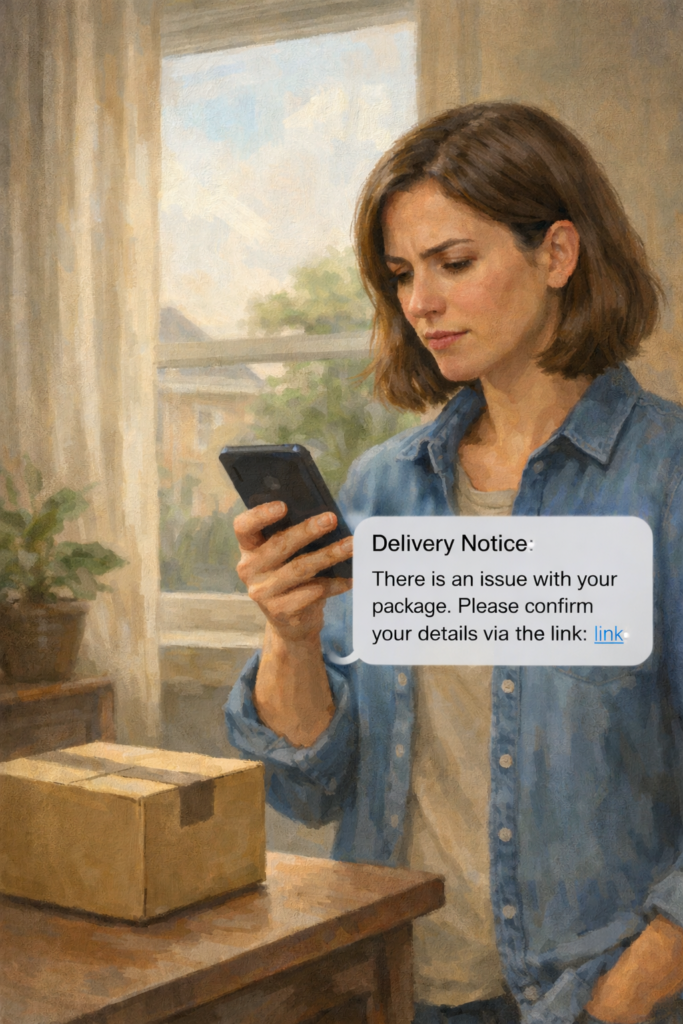
What is the scam?
The USPS delivery problem text scam is a common package impersonation scam where you receive a text message claiming there is an issue with a delivery, such as an incomplete address, a failed delivery attempt, or a small unpaid fee. The message typically urges you to click a link to “resolve” the problem. These texts are not from the United States Postal Service. They are designed to trick you into entering personal information, payment details, or account credentials on a fake website by creating urgency around something that feels routine and believable.
How this scam usually works
The scam starts with an unsolicited text that appears to come from USPS and references a vague delivery problem to spark concern. The message includes a link that leads to a fake tracking or “delivery update” page designed to resemble an official USPS site. Once there, you may be asked to confirm personal details, enter a credit card for a small “redelivery” fee, or provide information that can be used for identity theft. In many cases, the goal is not the small payment itself but collecting enough information to enable future fraud.
How to protect yourself
The safest approach is to never click links in unexpected delivery texts. If you think a message could be legitimate, open a new browser window and go to USPS.com directly (or visit the retailer where you placed the order) to check tracking information without using the link provided. Be especially cautious with messages that create urgency, use generic language, or push you to pay a small fee to “release” a package. Deleting suspicious messages and verifying shipping updates only through official websites will stop most delivery text scams before they cause damage.
What to do if you’ve been affected
If you clicked the link or entered information after receiving a USPS delivery problem text, monitor your bank and credit card accounts for unauthorized charges and contact your card issuer if anything looks unfamiliar. Change passwords for any accounts you entered on the scam page, and enable two-factor authentication where possible. If you shared sensitive personal information, consider placing a fraud alert or credit freeze to reduce the risk of identity theft, and keep an eye out for follow-up scams that may target you again after an initial response.
Related Articles
Fake Package Delivery Text Scams Explained
Fake Toll Payment Text
What Real Companies Will Never Ask You To Do