
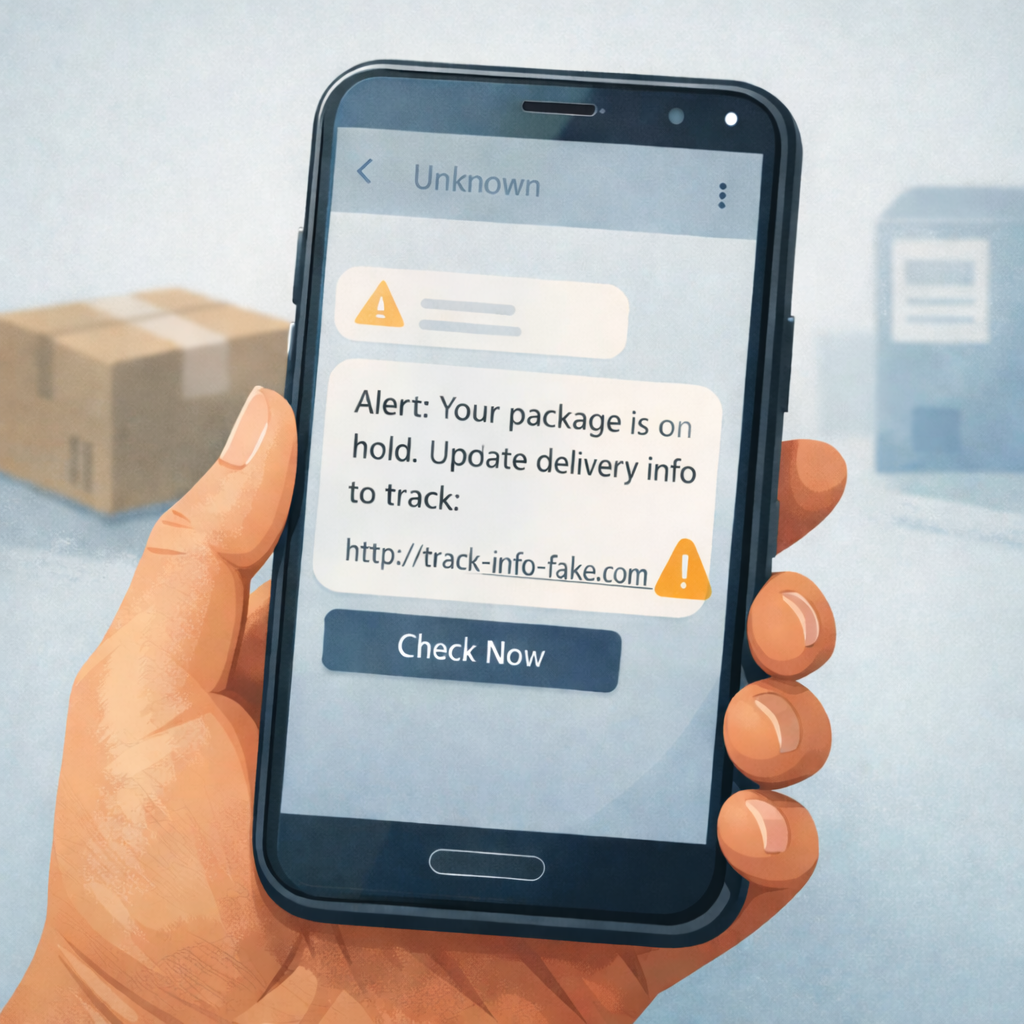
What is the scam?
The fake package delivery scam is a long-running and widespread scam that involves text messages or emails falsely claiming there is a problem with a delivery, such as a missing address, unpaid fee, or delayed shipment. These messages are designed to look like routine shipping notifications from well-known carriers and often arrive when people are expecting packages, making them feel believable and familiar. The goal is to get the recipient to click a link that leads to a fake tracking page where personal information, payment details, or login credentials are requested.
How this scam usually works
This scam usually begins with an unsolicited text message or email stating that a package cannot be delivered and prompting the recipient to click a link to resolve the issue. The link leads to a convincing but fake website that mimics a legitimate delivery service and asks for information such as name, address, credit card details, or account logins. In some cases, victims are asked to pay a small redelivery or processing fee, while in others the goal is identity theft or future fraud using the collected information.
How to protect yourself
You can protect yourself by treating unexpected delivery messages with caution, especially those that include links or urgent language. Legitimate delivery companies do not ask for sensitive information or payments through unsolicited texts or emails. If you are expecting a package, check its status by visiting the carrier’s official website directly rather than clicking a link in a message. Keeping your devices updated and using spam filters can also help reduce exposure to these scams.
What to do if you’ve been affected
If you clicked a link or shared information in response to a fake package delivery message, take action as soon as possible by monitoring your financial accounts, changing any compromised passwords, and placing fraud alerts if needed. If payment information was provided, contact your bank or card issuer immediately. You can also report the scam to the Federal Trade Commission to help track scam activity and prevent others from being targeted.
Related Articles
Government Impersonation Scam
Subscription Renewal & Billing Scam: How It Works and How to Avoid It
Account Takeover Scams