
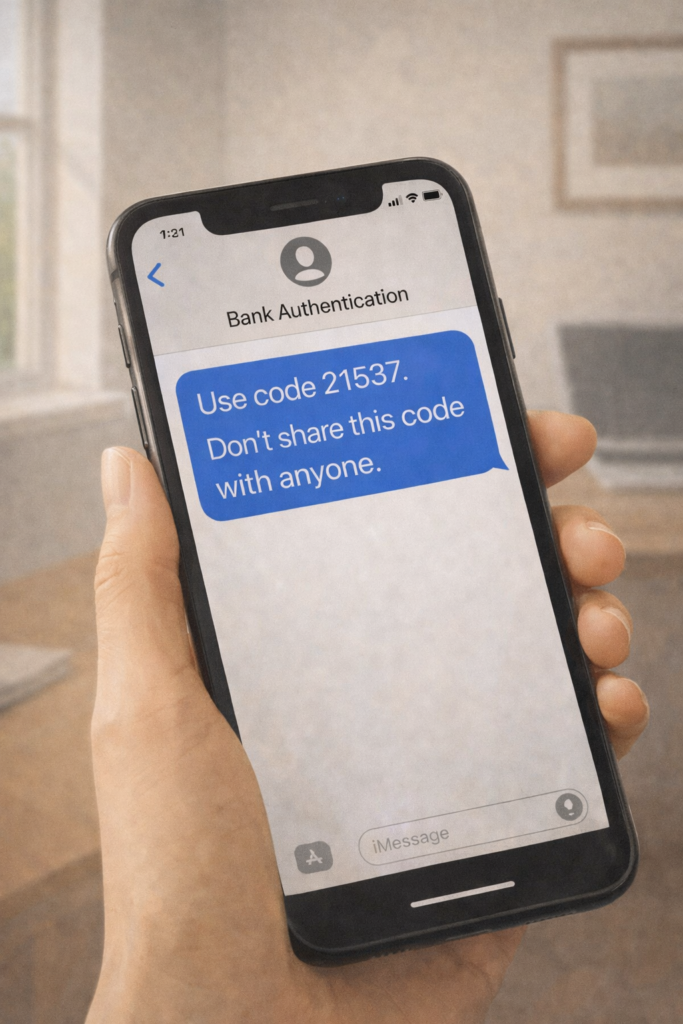
What is the fake two-factor authentication approval scam?
The fake two-factor authentication approval scam is an emerging account takeover scam that targets people by abusing legitimate login security prompts. Instead of tricking victims into handing over passwords or codes, scammers rely on real authentication requests and count on confusion, urgency, or routine behavior to get someone to approve a sign-in they did not initiate. Victims are harmed not because they ignore warnings, but because approving security prompts feels like a normal and safe action. Once the approval happens, scammers can gain full access to the account within seconds.
How this scam usually works
This scam usually begins when a scammer already has a password, often obtained through a previous data breach or phishing attempt. Using that password, the scammer attempts to log in, which triggers a real two-factor authentication request sent to the victim’s phone or authentication app. The victim receives a push notification, text message, or in-app prompt asking them to approve the sign-in. If the victim approves the request, even once, the scammer is logged in without needing to bypass security systems. In many cases, scammers send repeated approval prompts in a short period of time to increase the chances that the victim clicks “approve” just to make the alerts stop.
Another common version of this scam is when scammers initiate contact with you, posing as tech support, and are there to help with some sort of security issue. They say they’re going to send your phone or email a security code, and ask you to repeat the code back to them. Never share a two factor authentication code with anyone. Legitimate companies will never ask for this information.
Why this scam is effective
This scam is effective because it blends seamlessly into normal digital behavior. The alerts are real, the services are familiar, and the messages look identical to legitimate login notifications people see every day. Many victims do not realize that approving a two-factor authentication request is the final step that grants account access. Scammers exploit trust in security systems, notification fatigue, and the assumption that approving a prompt is a protective action rather than a risky one.
Warning signs to watch for
Common warning signs include login approval requests you did not initiate, repeated two-factor prompts within a short period of time, and messages suggesting approval is required to “secure” or “protect” your account. Pressure to act quickly or language implying that access will be lost if you do not respond immediately are also red flags. When more than one of these signs appears together, it strongly suggests a scam rather than a legitimate security issue.
How to protect yourself
The most effective protection is to never approve a login request you did not personally initiate. You should never share with anyone the numbers received in an authentication text or email. If you receive an unexpected authentication prompt, open the app or website directly instead of interacting with the alert. Change your password immediately if anything seems suspicious and review recent login activity whenever that option is available. Using strong, unique passwords and a password manager can also reduce the impact of data breaches that make this scam possible.
What to do if you’ve been affected
If you believe you may have approved a fraudulent login request, act quickly to secure your account. Change your password right away, update recovery email addresses and phone numbers, and log out of all active sessions if possible. Review account settings for unauthorized changes and warn contacts if messages may have been sent from your account without your knowledge. Many people fall for this scam because the alerts appear legitimate, so fast corrective action matters more than assigning blame.
Why this scam is considered emerging and on the rise
This scam is considered emerging because it takes advantage of newer authentication systems that rely on app-based approvals instead of passwords or one-time codes. As more platforms adopt push-based security prompts, scammers are increasingly abusing these systems by exploiting gaps in user understanding rather than technical weaknesses. While account takeover scams are not new, this approval-based tactic is spreading quickly as authentication methods continue to evolve.
Related articles
Google Tech Support Scam
Zelle, Venmo, and Cash App Payment Reversal Scams
Someone I Love Might Be Getting Scammed